Four materials have gone into British cavity walls in any quantity, and each one behaves differently when it fails and when it is removed. You may already know which one you have from the paperwork; if not, the borescope shows it at the survey.
Blown mineral wool
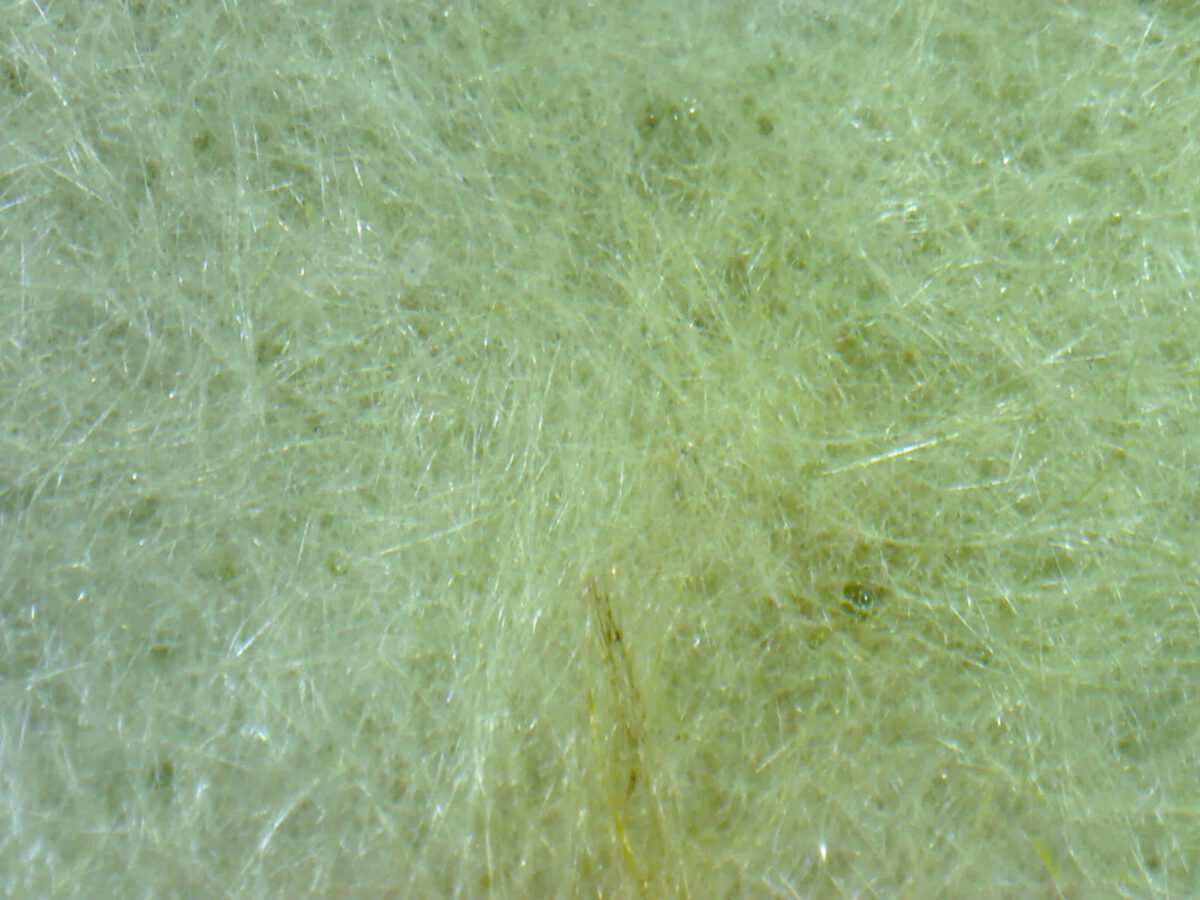
Rock wool or glass wool, blown in as loose fibre through a pattern of holes drilled in the mortar joints. CIGA describes it as the material used in the majority of installations, and it has been the standard fill for the grant-funded programmes of the last few decades.
Polystyrene bead
Small expanded polystyrene beads, blown in and, in most systems, mixed with an adhesive at the nozzle so they bond into a mass. The Centre for Sustainable Energy notes bead has become the most common material for new retrofit installs because it does not absorb water and reaches awkward corners.
Urea formaldehyde foam
A two-part water-based chemical mix injected into the cavity where it foams and sets. CIGA records it as introduced to the UK in the late 1960s, and by 1982 the government told Parliament it had been used for about twenty years and in around a million homes.
Polyurethane foam
Injected as a liquid that expands and sets rigid. It bonds to both leaves of the wall, so it has to be broken up to come out and takes longest to remove.
Not sure which you have?
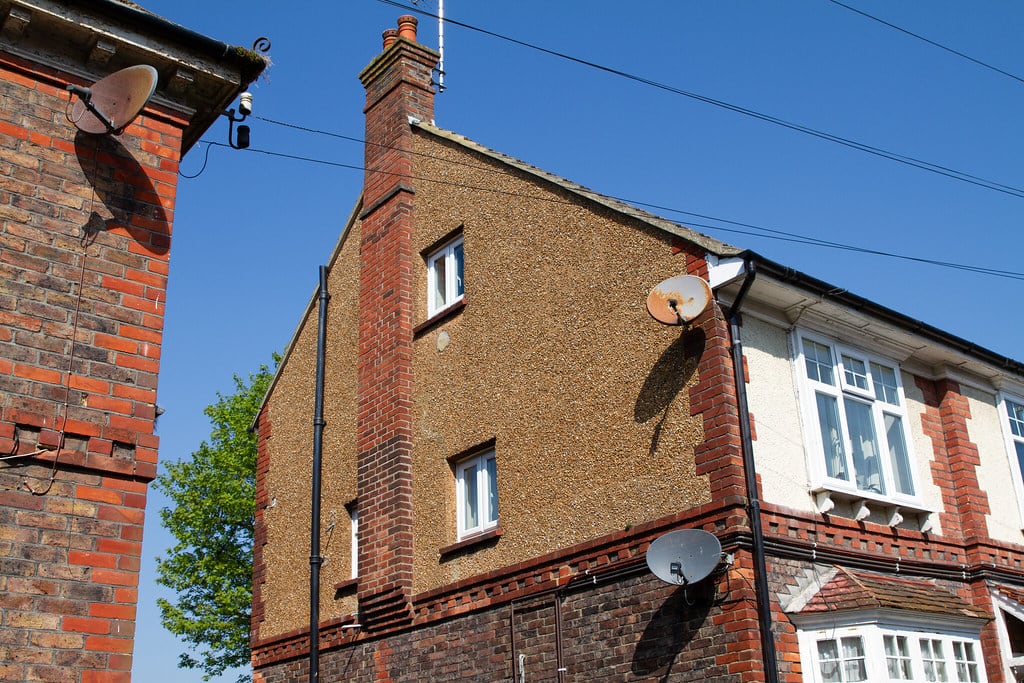
Look at the outside wall for the pattern of filled holes in the mortar, which tells you the wall was injected, but not with what. The guarantee certificate, if you have one, names the material and the installer.
Whichever material is in your wall, the survey comes first. Book a free survey and the surveyor will name the material and say what it is doing.