Ask why so many houses have had trouble with cavity wall insulation and you will hear about careless installers, grant schemes done in a hurry, and cheap material. Some of that is true. But the older answer is in the building guidance, which has said for decades that a filled 50mm cavity is not suitable in the wetter parts of the country. Many of those walls were filled anyway.
The map in Approved Document C
Part C of the Building Regulations, which applies in England and Wales, deals with resistance to moisture. It carries a map of the UK divided into four zones by how much wind-driven rain a wall can expect during a wet spell, worked out by the method in the British Standard BS 8104. Zone 1 is sheltered, with less than 33 litres of rain per square metre of wall per spell. Zone 2 is moderate, 33 to 56.5. Zone 3 is severe, 56.5 to 100. Zone 4 is very severe, anything over 100. The same map appears in the BRE report BR 262 on avoiding risks with thermal insulation.
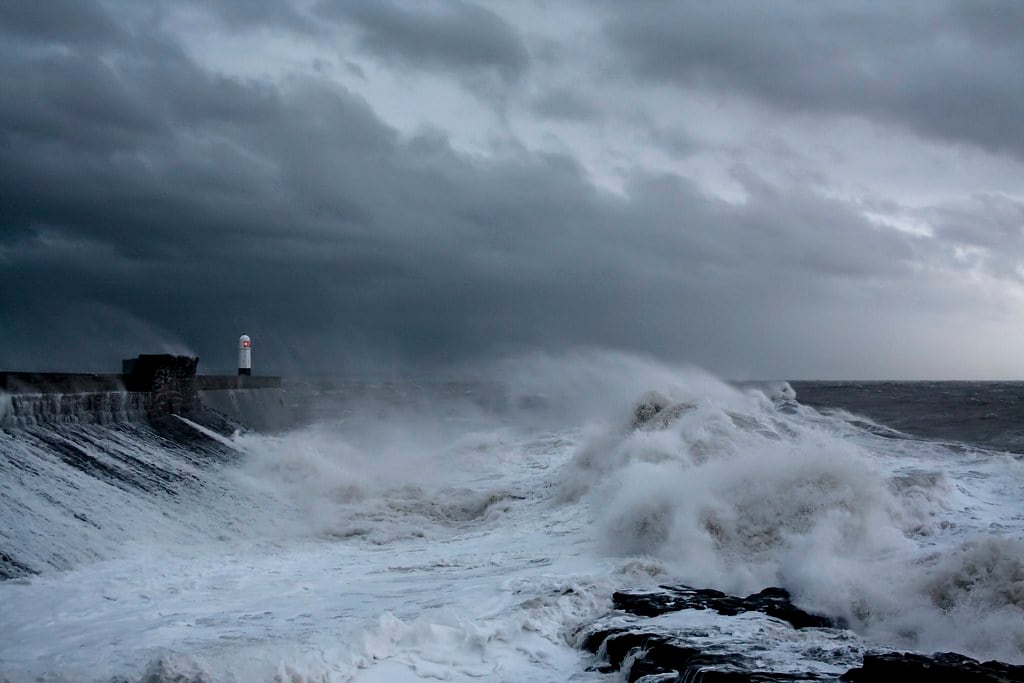
Now look at where the higher zones fall. They cover the wetter western and northern parts of Britain, including most of Wales, the south-west, the north-west and western Scotland. The Welsh retrofit advice service Cartrefi Clyd puts Wales largely in zones 3 and 4. A 2021 research paper for the UK government, written by BRE, calculated the index for Swansea at 116 litres per square metre per spell and described the city as a mid-range example of the very severe band. Within Wales, the coast, the valley heads and the high ground are the worst of it; Cardiff, Newport and the levels are more sheltered but still, on the regional map, severe.
What the guidance says about filling a cavity there
This is the part that matters. Approved Document C ties cavity width and fill to exposure. In BRE’s summary of it, for fair-faced brick with an injected fill, a 50mm filled cavity is acceptable only up to zone 2, a 75mm to 125mm filled cavity up to zone 3, and only a filled cavity of 150mm or more is considered acceptable in zone 4. Most houses built between the 1930s and the 1990s have a cavity of around 50mm, because that was the standard width; the NHBC’s own research notes that 50mm was the norm when its restrictions on full fill came in after widespread rain penetration around 1990. For new build in very severe locations, NHBC standards do not permit fair-faced masonry with a fully filled cavity at all. And for existing homes, the Welsh retrofit guidance says that in zone 4 retrofitted cavity wall insulation is not recommended, full stop.
So the rule was there. A 50mm cavity in a fair-faced brick wall in a zone 3 or zone 4 location should, on the guidance, not have been filled. Large numbers were, in Wales and across the rest of Britain.
What happened next
The clearest public account is from Wales. In June 2017 the Welsh Government’s Cabinet Secretary for Environment and Rural Affairs made a written statement to the Senedd about cavity wall insulation in Wales. It followed a report by BRE for Constructing Excellence in Wales. The report had found insulation installed in properties that were unsuitable, or contrary to good practice. Pre-installation assessments had been poor. Householders had not been told how to look after the walls afterwards. And the redress process when things went wrong was weak. The statement said that proper assessment must take account of a property’s exposure to wind-driven rain. By then CIGA had issued over 300,000 guarantees in Wales, with just over 2,000 claims.
Why one house fails and the next does not
The map is regional. Your wall’s actual exposure depends on which way it faces, what stands in front of it, and how high up it is. Most driven rain arrives on south-facing and west-facing walls. A gable facing that way at the top of a hill, with open ground in front of it, takes many times the rain of a north-facing wall in a sheltered cul-de-sac in the same town. That is why one house has a sodden gable and three dry walls, and the house next door, filled the same day, is fine.
The material matters less than the wall. Blown mineral wool soaks up water and slumps; BRE notes that saturation is more likely with wool than with bead, because polystyrene does not absorb. But bead in a wet 50mm cavity on a very severe site still lets water track across along ties and through the gaps between beads. The wall was built to have a gap in it for a reason, and on the weather side of an exposed hill that reason has not gone away.
What to do if this is your house
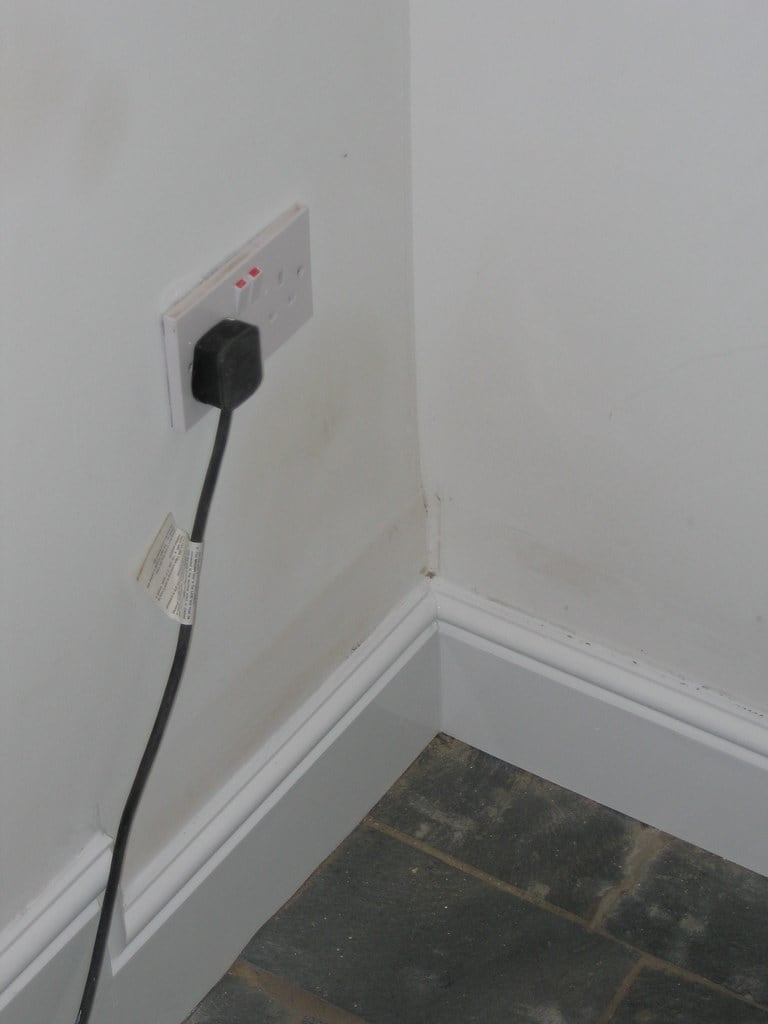
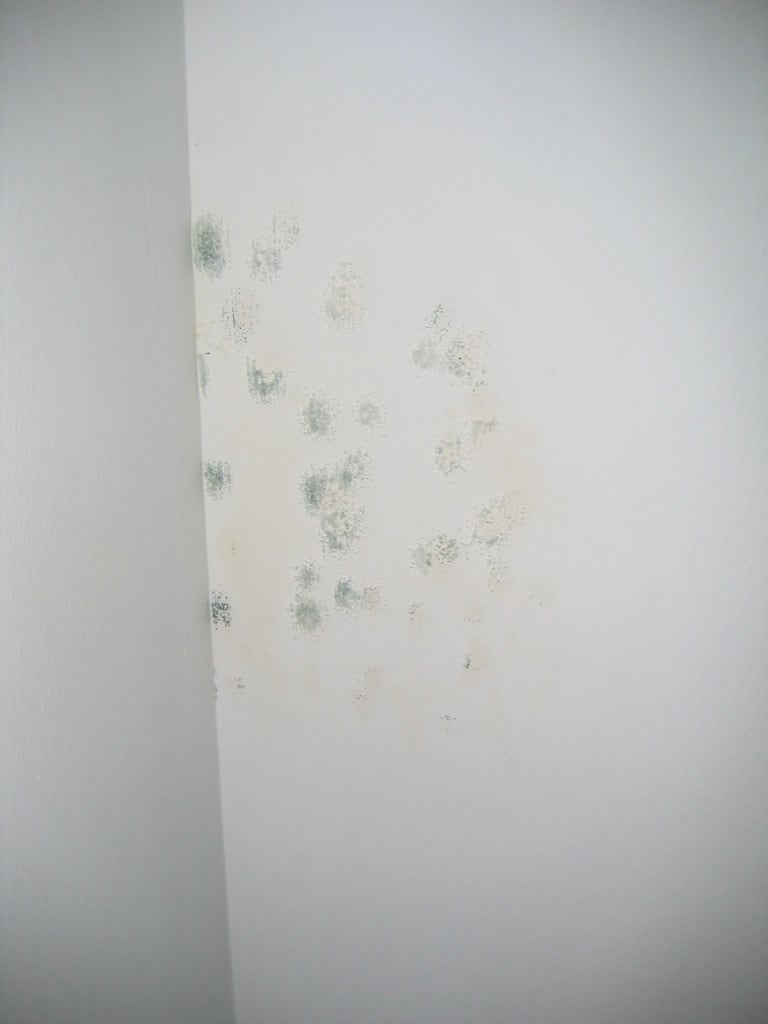
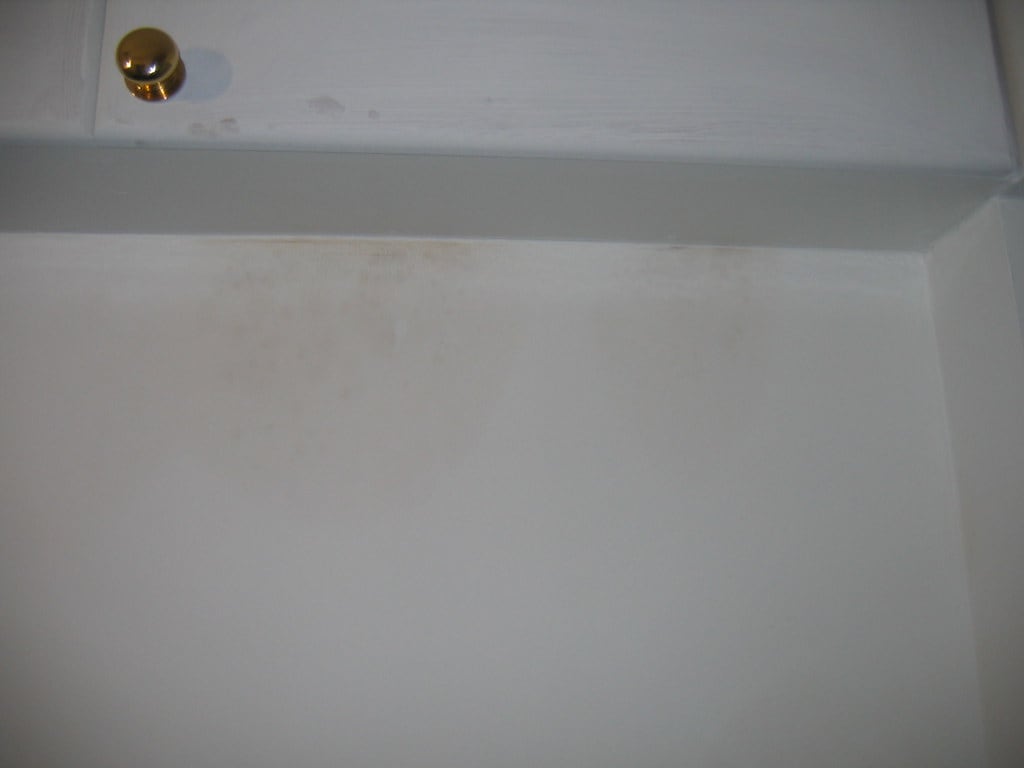
First, do not assume. Damp on an exposed wall can be a gutter, a sill, open pointing or a missing cavity tray as easily as wet fill. Get someone to put a borescope through the mortar joint and look at the fill directly, and to take moisture readings across the wall so the pattern is mapped. Second, find the paperwork. If the insulation was installed by a registered installer, it may carry a CIGA guarantee, and under that guarantee defective installations are put right without charge. Claim before you pay anyone, and before anyone disturbs the fill, because CIGA’s terms say the guarantee is not valid if the insulation has been altered. Third, if the wall is one the guidance says should never have been filled, have that elevation cleared and think hard before letting anyone refill it.
The weather is not going to change in the direction that helps. Government projections published in 2024 suggest wind-driven rain on south and west-facing walls increases over England and Wales as the climate warms, especially on western coasts. The walls that are wet now will be wetter. That is not a reason to panic. It is a reason to find out what is in your cavity, and to decide on evidence rather than on what the installer’s leaflet said at the time.